1 Common Hardwood Lumber Wilkes, NC
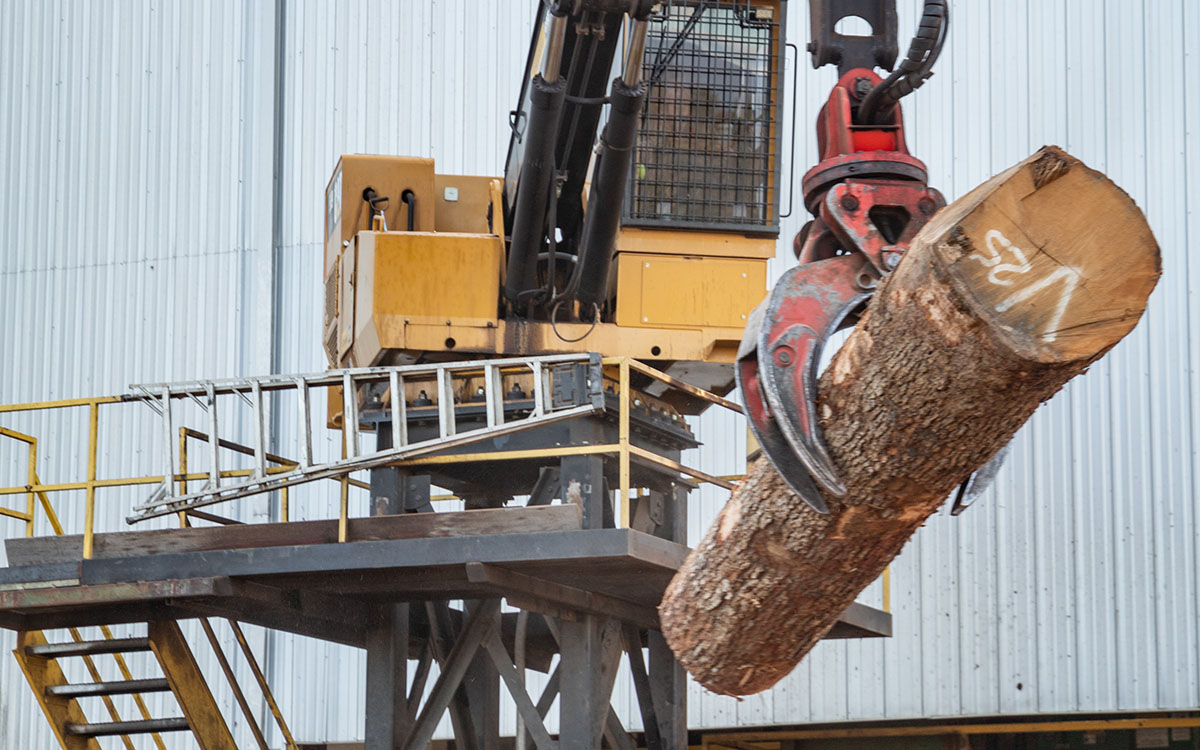 Wilkes County, North Carolina, has a long connection to timber, sawmilling, woodworking, furniture manufacturing, and the Appalachian hardwood industry. The forests throughout Wilkes and the surrounding foothills contain valuable hardwood species that have supplied manufacturers, craftsmen, flooring producers, cabinet shops, millwork operations, and other wood-product businesses for generations. For buyers who depend on hardwood lumber, having access to properly processed and graded material is an important part of controlling both product quality and manufacturing costs.
Select Hardwoods works directly within this hardwood-producing region. As the Select Hardwoods Division of Church and Church Lumber Company, we kiln dry Appalachian hardwoods for furniture, flooring, millwork, cabinetry, and other applications for customers throughout the United States and international markets. Our location and connection to the broader Church and Church operation give us direct experience with hardwood from the forest through processing, drying, grading, sorting, and shipment.
Not every project requires the highest available hardwood lumber grade. In many manufacturing situations, buyers are more concerned with usable yield, required cutting sizes, species, appearance, and overall cost efficiency. That is where 1 Common hardwood lumber becomes particularly important.
Buyers searching for 1 Common hardwood lumber in Wilkes, NC can turn to Select Hardwoods for Appalachian hardwood products backed by generations of lumber industry experience. Understanding what 1 Common means, how hardwood lumber is graded, and where the grade makes sense can help buyers purchase lumber that matches their manufacturing requirements rather than paying for characteristics they may not need.
What Is 1 Common Hardwood Lumber?
1 Common, also commonly written as No. 1 Common or #1 Common, is one of the standard grades used within the North American hardwood lumber industry. Hardwood grades are primarily intended to communicate how much clear, usable material can be recovered from a board through cutting.
The National Hardwood Lumber Association, or NHLA, establishes the grading rules that create a common system for hardwood buyers, sellers, sawmills, and manufacturers. NHLA describes its grading rules as the industry standard for consistent classification of North American hardwood lumber.
Under the applicable NHLA standard rules, No. 1 Common lumber must generally provide a 66 2/3 percent clear-face yield in qualifying cuttings. The number and dimensions of allowable clear cuttings depend on board length, width, species, and other grading requirements.
This distinction is important because the grade does not mean that two-thirds of every board will necessarily appear completely defect-free when viewed as one continuous surface. Hardwood grading evaluates the amount of usable clear material that can be recovered from the board according to established cutting rules.
For manufacturers who cut larger boards into smaller components, that can make 1 Common lumber highly useful.
Why Is 1 Common Hardwood Lumber Important?
Hardwood lumber purchasing is ultimately about matching material to the finished product. A manufacturer producing smaller furniture components has different requirements than a business producing long, wide architectural pieces. Paying for lumber characteristics that disappear during the manufacturing process can unnecessarily increase material costs.
1 Common gives hardwood buyers another option between higher grades and lower common grades.
Depending on the project, manufacturers may be able to use 1 Common lumber for:
- Furniture components: Boards can be processed into rails, stiles, legs, supports, panels, and other individual pieces.
- Cabinet components: Clear sections can be recovered for face frames, doors, drawer components, trim, and other applications.
- Flooring: Lumber may be ripped, crosscut, and processed into flooring blanks according to the manufacturer's specifications.
- Millwork: Suitable clear sections can become moulding, trim, and other manufactured components.
- Edge-glued products: Smaller clear pieces can be processed and joined into larger finished components.
- Specialty woodworking: Manufacturers can select usable portions of boards based on their individual cutting requirements.
The grade can be particularly attractive when the manufacturer already expects to break lumber into shorter or narrower pieces.
How Is 1 Common Hardwood Lumber Different From FAS Lumber?
One of the easiest ways to understand 1 Common lumber is to compare it with higher hardwood grades.
FAS is generally associated with a greater percentage of clear wood and larger clear cuttings. It is often appropriate when a manufacturer needs long, wide, relatively clear components. Those characteristics can be valuable, but they are not necessary for every manufacturing process.
1 Common accepts more characteristics outside the required clear cuttings while still providing a significant amount of usable material. The right decision therefore depends on what the buyer intends to produce.
A company making large tabletops, wide architectural components, or long clear mouldings may place greater value on higher-grade lumber. A manufacturer cutting boards into shorter cabinet, furniture, flooring, or millwork components may be able to obtain the required pieces from 1 Common material.
Grade selection should follow the cutting bill whenever possible.
How Can 1 Common Lumber Improve Hardwood Yield?
Yield is one of the most important considerations in hardwood manufacturing. A board should not be evaluated solely by how it looks before it reaches the saw. Manufacturers need to consider what usable components can actually be recovered from it.
Suppose a furniture manufacturer needs multiple relatively short components rather than one long clear board. A characteristic located between the required component lengths may have little effect on production because the board was going to be crosscut in that location anyway.
The manufacturer may be able to cut around knots, splits, wane, or other grade-limiting characteristics and recover the pieces needed for production.
This can make 1 Common useful for operations with cutting bills that require:
- Multiple shorter components
- Relatively narrow components
- Random-length parts
- Glued-up assemblies
- Interior components
- Flooring strips
- Cabinet parts
- Furniture parts
The important question is not simply, "Which grade is highest?" A better question is, "Which grade provides the material our operation needs at an efficient yield?"
What 1 Common Hardwood Lumber Options Are Available From Select Hardwoods?
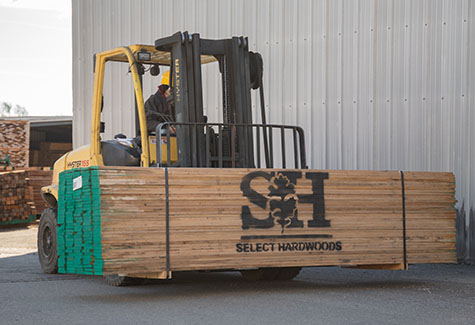 Select Hardwoods supplies an extensive selection of Appalachian hardwood products. Our current hardwood product lineup includes Rift and Quartered White Oak, Plain Sawn White Oak, Red Oak, Hickory, Poplar, Cherry, Soft Maple, Walnut, Ash, and Sycamore.
Availability by species, grade, thickness, width, length, and quantity can change, so buyers looking specifically for 1 Common should contact Select Hardwoods about current inventory and requirements.
Our inventory has included 1 Common material across multiple hardwood categories. Recent Select Hardwoods stock information, for example, has listed 1 Common options in species and sorts including Poplar, Red Oak, White Oak, Rift and Quartered material, Hickory, Maple, and Walnut, although current availability should always be confirmed when ordering.
1 Common White Oak Lumber
White Oak remains one of the most important American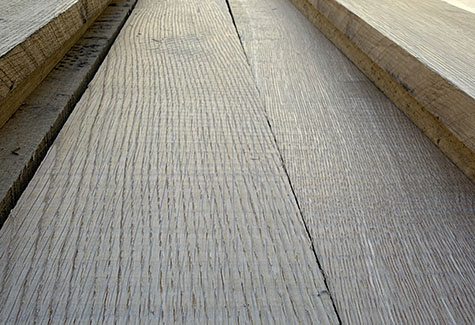 hardwood species for flooring, furniture, cabinetry, millwork, and architectural applications.
Select Hardwoods offers both Plain Sawn White Oak and specialty Rift and Quartered White Oak products. Our product selection gives buyers the ability to consider grade along with grain orientation and manufacturing requirements.
For operations that intend to cut White Oak into smaller components, 1 Common may provide an opportunity to obtain the required clear pieces without purchasing higher-grade material throughout the order.
1 Common Red Oak Lumber
Red Oak has long been an important commercial hardwood because it machines well and can be used across furniture, flooring, cabinetry, architectural millwork, and related products.
Select Hardwoods supplies Red Oak in multiple grades and sorts depending on inventory. Manufacturers should evaluate required component sizes when deciding whether 1 Common Red Oak fits their production needs.
1 Common Poplar Lumber
Poplar is widely used for painted furniture, moulding, millwork, cabinetry components, interior trim, and other manufactured wood products.
Because many Poplar applications involve ripping and crosscutting boards into smaller pieces, manufacturers may find 1 Common particularly useful when their cutting requirements align with the grade.
1 Common Hickory Lumber
Hickory is known for its strength and shock resistance and is used in applications ranging from furniture and flooring to tool handles and other demanding products. Select Hardwoods carries Hickory as part of our Appalachian hardwood inventory.
NHLA also notes that lower Hickory grades, including 1 Common, can be useful when manufacturers or designers want a more character-rich appearance.
Other Appalachian Hardwood Lumber Options
Depending on current inventory and customer requirements, Select Hardwoods can also supply lumber in species including Cherry, Soft Maple, Walnut, Ash, Sycamore, and other hardwood products.
Buyers should discuss the combination of species, grade, thickness, width, length, quantity, color requirements, and intended application with our team. Hardwood purchasing works best when those specifications are considered together.
Why Does Kiln Drying Matter For 1 Common Hardwood Lumber?
Grade is only one part of hardwood lumber quality.
Moisture content and drying quality also affect how material performs once it enters production. Improperly dried lumber can create machining problems and increase the risk of movement after manufacturing.
Select Hardwoods specializes in kiln drying premier Appalachian hardwoods. From the tree to the finished board, careful processing helps us supply hardwood lumber intended for demanding manufacturing applications.
Customers purchasing 1 Common material should therefore consider more than the grade stamp. Proper manufacturing, sorting, drying, and handling all affect how efficiently lumber moves through production.
Why Buy 1 Common Hardwood Lumber In Wilkes, NC From Select Hardwoods?
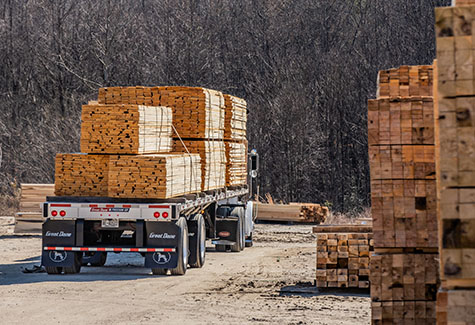 Wilkes County sits within an important Appalachian hardwood-producing region, giving local lumber operations access to species that are sought by domestic and international manufacturers.
Select Hardwoods is part of a broader lumber operation that manages multiple stages of the process. Church and Church Lumber Company works in forestry management, timber harvesting, sawmilling, and related lumber processing, while Select Hardwoods kiln dries and prepares Appalachian hardwood products. Church and Church describes its process as extending from forestry and timber harvesting through sawmilling and kiln drying.
That experience matters when buyers need more than a generic load of hardwood.
Customers may have requirements involving:
- Specific hardwood species
- 1 Common or other NHLA grades
- Particular thicknesses
- Width requirements
- Length requirements
- Rift or quartered grain
- Color sorts
- Manufacturing specifications
- Domestic shipment
- Container and export orders
Our goal is to help customers obtain lumber suited to how they actually manufacture their products.
Choosing The Right Hardwood Grade For Your Manufacturing Operation
There is no single hardwood grade that makes sense for every buyer.
Higher grades may provide excellent value when long and wide clear pieces are essential. 1 Common may provide better economics when a cutting bill allows manufacturers to recover smaller clear components from each board. Other grades may be appropriate when character is acceptable or when parts are particularly small.
Before ordering hardwood lumber, consider:
- What finished dimensions do you need?
- How long are the clear components?
- How wide are the components?
- Will boards be ripped into several pieces?
- Will they be crosscut into shorter lengths?
- Are natural characteristics acceptable in the finished product?
- Is color matching important?
- Does grain orientation matter?
- What yield do you expect from each grade?
- Which grade produces the lowest actual material cost per usable component?
These questions can provide far more useful information than simply ordering the highest grade available.
Choose Select Hardwoods For 1 Common Hardwood Lumber In Wilkes, NC
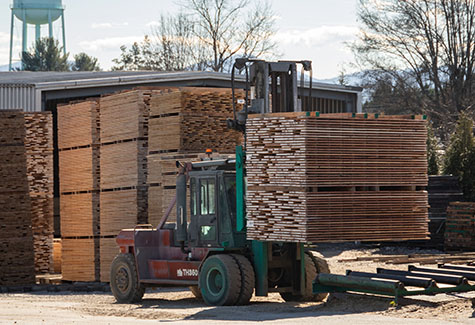 When you are searching for 1 Common hardwood lumber in Wilkes, NC, talk with Select Hardwoods about the species, grade, dimensions, volume, and manufacturing requirements your operation needs.
Select Hardwoods supplies kiln-dried Appalachian hardwoods for customers using lumber in flooring, furniture, cabinetry, millwork, and other manufactured products. Our connection to Church and Church Lumber Company gives us experience across the hardwood supply chain, beginning with the forests of North Carolina and continuing through harvesting, sawmilling, drying, grading, sorting, and lumber sales.
For North Carolina landowners on the other end of that process, Church and Church Lumber Company also provides professional forestry services including timber purchasing, timber harvesting, and forest management planning.
Whether you need quality Appalachian hardwood lumber through Select Hardwoods or professional forestry management in North Carolina through Church and Church Lumber Company, contact our team to discuss what you need. We can help manufacturers source the right lumber and help landowners manage valuable timber resources with the long-term future of their property in mind.