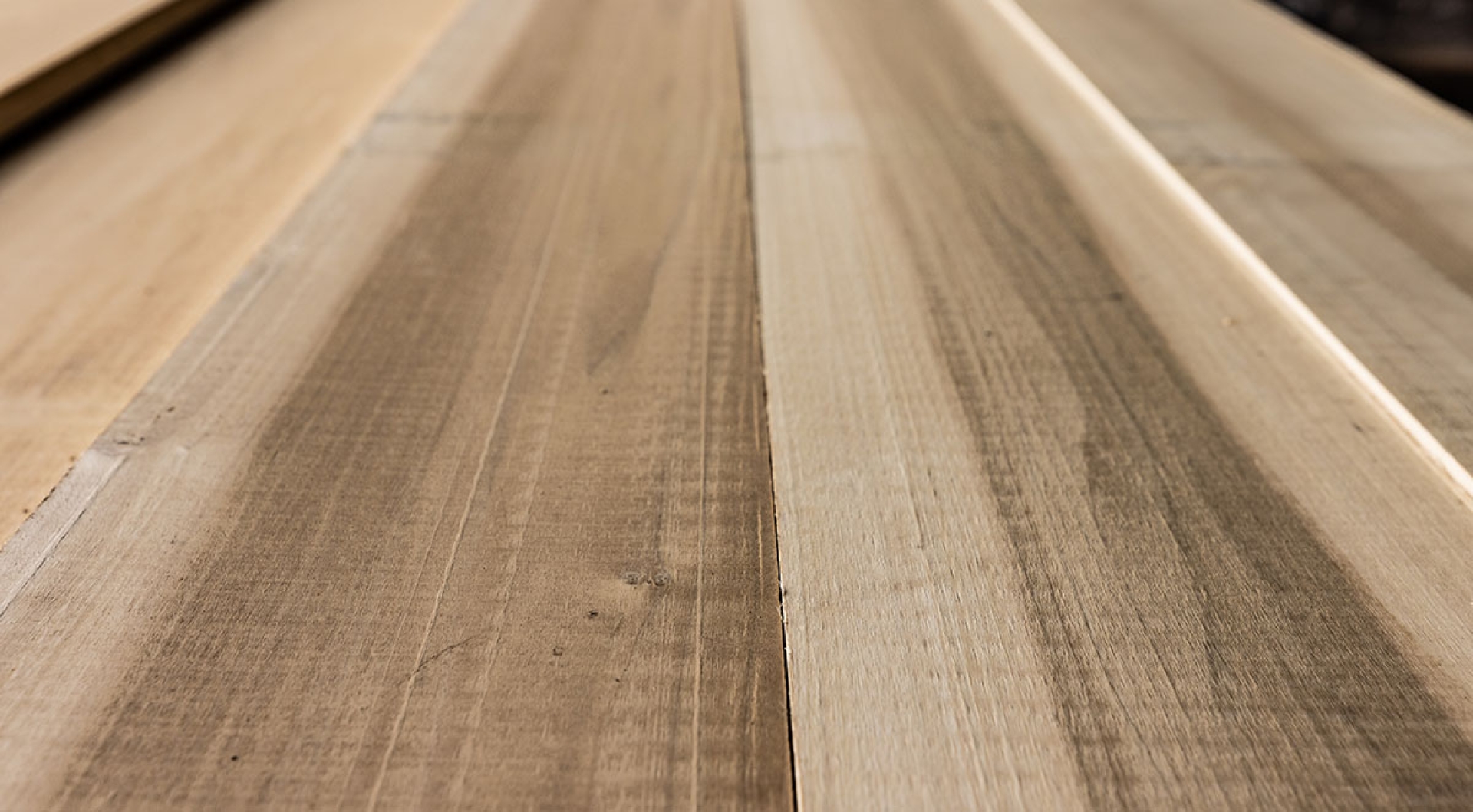
1. Appalachian Hardwoods Demand Worldwide Is Driven By Superior Growth Conditions
Appalachian hardwoods grow in a region that has excellent soil quality, ample rainfall, and stable temperatures. These conditions influence every part of hardwood development.
Hardwoods that grow gradually tend to form tight growth rings. Appalachian forests benefit from cold winters and warm summers that pace growth over long cycles. This produces lumber that is dense, stable, and less prone to warping during manufacturing.
The region's climate supports uniform coloring within species such as white oak, red oak, hard maple, and cherry. Manufacturers prefer Appalachian hardwoods because lumber from this region produces predictable finishes across large production runs.
The forest ecosystem naturally regenerates without requiring artificial planting. This contributes to sustainability and maintains consistent species availability from season to season.
2. Sustainable Forestry Practices Strengthen Worldwide Demand For Appalachian Hardwoods
Sustainability influences purchasing decisions across global markets. International buyers increasingly prioritize wood that can be tracked, documented, and verified through responsible forestry.
Stewardship Across Appalachian Forests
Generations of landowners, foresters, and sawmills have preserved the health of Appalachian forests. Inventory grows faster than removal, which keeps the resource stable for long-term supply. This matters for overseas buyers whose manufacturing cycles require predictability.
Many mills and forest owners participate in programs that practice sustainable harvesting and forest management. This level of traceability makes Appalachian hardwoods attractive to architects, government projects, and major manufacturers working under strict environmental standards.
Well-managed hardwood forests store carbon efficiently. Appalachian hardwoods offer environmental value not only at the forest level but also through the lifespan of finished products. Flooring, furniture, and millwork continue to store carbon after installation.
3. The Natural Properties Of Appalachian Hardwoods Increase Their Global Appeal
The strength, stability, and appearance of Appalachian hardwoods allow them to perform in climates ranging from humid tropical regions to cold northern climates. This resilience is a major reason for consistent worldwide demand.
Durability For Flooring And High-Traffic Surfaces
White oak and hard maple are known for hardness values that outperform many alternative species. Their ability to withstand wear is attractive to commercial builders, luxury residential designers, and global flooring manufacturers.
Workability For Furniture And Cabinetry
Cabinet and furniture makers appreciate how Appalachian hardwoods machine, sand, and finish. They hold fasteners well, absorb stain consistently, and respond predictably during shaping and assembly.
Stability In Changing Climates
The slow growth of Appalachian hardwoods contributes to dimensional stability. Lumber that moves less during humidity changes is essential for export markets where products may travel through multiple climate zones before reaching the end user.
4. Appalachian Hardwood Species With The Highest Global Demand
Several species lead international shipments due to their performance, beauty, and consistency. Each brings unique strengths that make it valuable across markets and industries. Below are some of the Appalachian species most in demand and why they continue to outperform competitors in the global hardwood trade.
Appalachian White Oak
White oak is among the most sought-after Appalachian species on the global market. Its closed cellular structure makes it naturally water-resistant, which enhances durability and lends itself to a wide range of applications both indoors and outdoors. It is dense, strong, and accepts finishes evenly, making it a favorite for projects where both aesthetics and performance matter.
Its use extends far beyond traditional flooring. White oak is essential in cooperage (barrel staves for whiskey and wine), architectural millwork, European-style furniture, stair parts, and exterior trim. Builders prefer it for exterior doors and trim where moisture resistance is critical. Interior designers value it for its grain pattern, which ranges from subtle to dramatic depending on how it's sawn.
Key applications include:
- Barrel staves for wine and whiskey
- Solid and engineered flooring
- Doors and windows
- Custom millwork and trim
- Architectural wall panels and beams
- Premium case goods and furniture
Appalachian Red Oak
Red oak is widely exported due to its availability, consistent quality, and adaptability to finishing techniques. Its open grain structure and pale reddish hue give it a clean, warm appearance that complements both traditional and contemporary aesthetics. Red oak responds well to staining, allowing designers and manufacturers to match a wide spectrum of color palettes.
Its workability, abundance, and competitive cost make red oak a practical choice for commercial and residential furniture production. It also remains one of the most common species in both unfinished and prefinished flooring for export markets. The balance between quality and cost positions red oak as a go-to material for manufacturers operating on scale.
Key applications include:
- Residential and commercial furniture
- Flooring and stair components
- Wall paneling and casework
- Interior mouldings and trim
Appalachian Hard Maple
Hard maple, also known as sugar maple, is valued globally for its strength, hardness, and ability to hold shape under pressure. Hard maple’s fine, even texture and light natural color make it a go-to species for modern interiors, butcher blocks, worktops, gymnasium floors, and sports courts. Hard maple resists abrasion and denting better than most domestic hardwoods.
The lumber machines exceptionally well and accepts paint and stain finishes when prepared properly. It is used extensively for tight-tolerance applications such as drawer boxes, cabinetry interiors, and musical instruments. The clarity and uniformity of Appalachian hard maple make it a consistent favorite among high-end producers.
Key applications include:
- Gym floors and athletic courts
- Butcher block and countertops
- Premium cabinetry and drawer boxes
- Turning stock and musical instruments
- Furniture frames and legs
Appalachian Cherry
Appalachian cherry is highly regarded for its color, which deepens beautifully over time from a light pinkish tone to a rich reddish-brown. The wood's smooth texture and fine grain give it a luxurious appearance, especially when finished with clear or oil-based products. Designers appreciate its elegance, while manufacturers praise its predictability in milling and finishing.
Though softer than oak or maple, cherry machines with less wear on tools, glues easily, and delivers a high-end feel that commands premium pricing in markets worldwide. It remains a symbol of craftsmanship and American hardwood elegance in international luxury furniture.
Key applications include:
- Custom furniture and heirloom pieces
- Cabinetry and built-ins
- Decorative millwork and paneling
- Musical instruments and specialty turning
Appalachian Poplar
Poplar is one of the most versatile Appalachian species for paint-grade and secondary applications. Though technically a hardwood, it is lightweight and relatively soft, making it ideal for components that need to be shaped, cut, and painted easily. Its neutral tone and uniform grain offer a blank canvas for finishes.
International manufacturers rely on poplar for everything from interior mouldings to drawer sides and engineered components. It is often used as a core material in veneered products. Poplar’s affordability, steady supply, and workability make it a backbone species in many industrial and millwork operations.
Key applications include:
- Mouldings and trim (especially paint-grade)
- Cabinet framing and drawer parts
- Doors and jambs
- Core stock for veneered panels
5. Why Manufacturers Prefer Appalachian Hardwoods
Appalachian hardwoods offer measurable performance advantages compared to species from other regions. These advantages reflect both the natural properties of the forest resource and the expertise of the region’s milling and grading systems.
Appalachian sawmills operate under consistent grading systems such as NHLA rules and often exceed minimum grade thresholds. This produces lumber that is not only uniform in quality but also in moisture content, dimensions, and appearance. For international manufacturers sourcing thousands of board feet, this level of reliability means less waste, fewer callbacks, and faster production cycles.
This uniformity is especially critical for operations that require tight joinery, such as furniture factories or millwork plants using CNC equipment. A truckload of Appalachian lumber can be expected to match previous shipments with minimal sorting.
Reliable Supply Chains of Appalachian Hardwoods
The hardwood industry in the Appalachian region is built on infrastructure developed over generations. Rail, road, and port systems are streamlined to support high-volume domestic and export shipments. Sawmills and concentration yards in the region regularly ship to the Port of Norfolk, Savannah, and others, ensuring efficient access to global markets.
Additionally, Appalachian forests regenerate naturally and grow faster than they are harvested, providing long-term supply assurance for international buyers.
Appalachian hardwoods are used for color consistency, minimal defects, and grain character. For visible components—such as cabinetry doors, flooring, or architectural panels—this means fewer inconsistencies between pieces. Furniture makers can count on Appalachian cherry or white oak to deliver a refined, cohesive look.
Architects and interior designers value Appalachian species for how they elevate residential and commercial spaces. Whether it’s rift-sawn white oak for minimalist interiors or quartersawn red oak for traditional millwork, these hardwoods adapt well to changing aesthetic preferences across markets.
Despite their quality, Appalachian hardwoods remain competitively priced against exotic imports and domestically grown alternatives. Buyers pay for strength, color uniformity, and predictability—not marketing hype or inflated supply chains. This combination of value and performance drives consistent global interest.
Because of the long-term relationships built between mills, exporters, and overseas buyers, Appalachian hardwood pricing tends to be stable even when global commodity markets fluctuate.
6. Global Industries That Depend On Appalachian Hardwoods
The demand for Appalachian hardwoods spans many industries. Each sector values the properties of these species for different reasons. These industries not only use the lumber for its functional performance but also depend on it for aesthetics, sustainability, and global availability.
Furniture Manufacturing
Furniture manufacturers around the world value Appalachian hardwoods for their machining properties and consistent finishes. Hard maple, cherry, and white oak are especially prized for structural and exposed components. Many international producers source Appalachian hardwoods for mid- to high-end furnishings that require both durability and design appeal.
In addition, the species' ability to hold screws, nails, and adhesives without splitting makes them ideal for joint-heavy applications. Manufacturers also appreciate their sandability and compatibility with stains, oils, lacquers, and paints.
Cabinetry And Millwork
In cabinetry and architectural millwork, Appalachian hardwoods shine for their ability to be produced at scale with minimal waste. The consistent grain pattern, especially in species like cherry and maple, reduces visual disruption across large cabinet runs. Poplar serves as a popular frame and interior component for painted cabinetry.
Millwork producers use these species for baseboards, window casings, crown mouldings, and stair parts, particularly where a smooth paint finish or natural wood tone is desired.
Flooring
Durability and dimensional stability are essential in global flooring markets. Appalachian white oak and red oak offer high Janka hardness ratings and grain structures that resist wear and take stain beautifully. Flooring producers prefer Appalachian sources because they allow them to maintain quality while meeting aesthetic trends like wide-plank, low-gloss, or wire-brushed finishes.
The flooring industry also benefits from the consistency of kiln-dried Appalachian lumber, which minimizes movement after installation.
Architectural And Structural Applications
For large-scale construction projects, especially commercial buildings and high-end residences, Appalachian hardwoods offer performance and aesthetics. White oak beams, stair treads, railings, and wall cladding are used in designs where the structure is meant to be seen. Rift and quartersawn products are especially popular for their straight grain and dimensional reliability.
Design-build firms value Appalachian species for both exposed structural use and hidden architectural elements, including blocking, joists, and support pieces that need to be both strong and workable.
Export Manufacturing
Mass-production environments, such as cabinet factories and engineered wood product lines in Europe and Asia, depend on raw materials that machine predictably, finish evenly, and hold up during shipping and installation. Appalachian hardwoods meet these needs with greater consistency than many softwood alternatives or tropical imports.
Export buyers often cite three reasons for continuing to source from the Appalachian region: consistent quality, reliable container schedules, and forest management transparency.
7. Key Advantages Of Appalachian Hardwoods For International Buyers
Below is a summary of the qualities that drive consistent worldwide demand:
- Strength: Tight growth rings create dense lumber suited for heavy use
- Consistency: Uniform color and grain patterns help manufacturers maintain quality
- Stability: Slow growth and proper drying reduce movement in changing environments
- Sustainability: Managed forests support long-term availability and environmental responsibility
- Variety: Many premium species grow throughout the Appalachian region
- Value: Excellent performance relative to cost strengthens demand across global markets
8. Why Select Hardwoods Supplies Appalachian Hardwoods Worldwide
Select Hardwoods serves clients around the world who require white oak, red oak, hard maple, poplar, and other Appalachian species for manufacturing, construction, and design. Buyers rely on Select Hardwoods for precision grading, strong supply chains, consistent moisture control, and long-term export partnerships. The company’s access to premium timber, combined with responsible forestry and mill-to-market expertise, makes Select Hardwoods a dependable source for international shipments.
If your business depends on Appalachian hardwoods, Select Hardwoods can supply the species, grades, and volumes required for global production cycles.
Choose Select Hardwoods For Appalachian Hardwoods Worldwide
Appalachian hardwoods are valued across global markets because they offer reliability, strength, sustainability, and visual appeal. Their natural characteristics, combined with responsible forestry and expert milling, position them among the most trusted hardwoods in the world. When you need consistent volume, dependable quality, and export-ready processing, Select Hardwoods is equipped to ship the materials you depend on, wherever you are located. Contact us for the highest-quality Appalachian hardwoods.