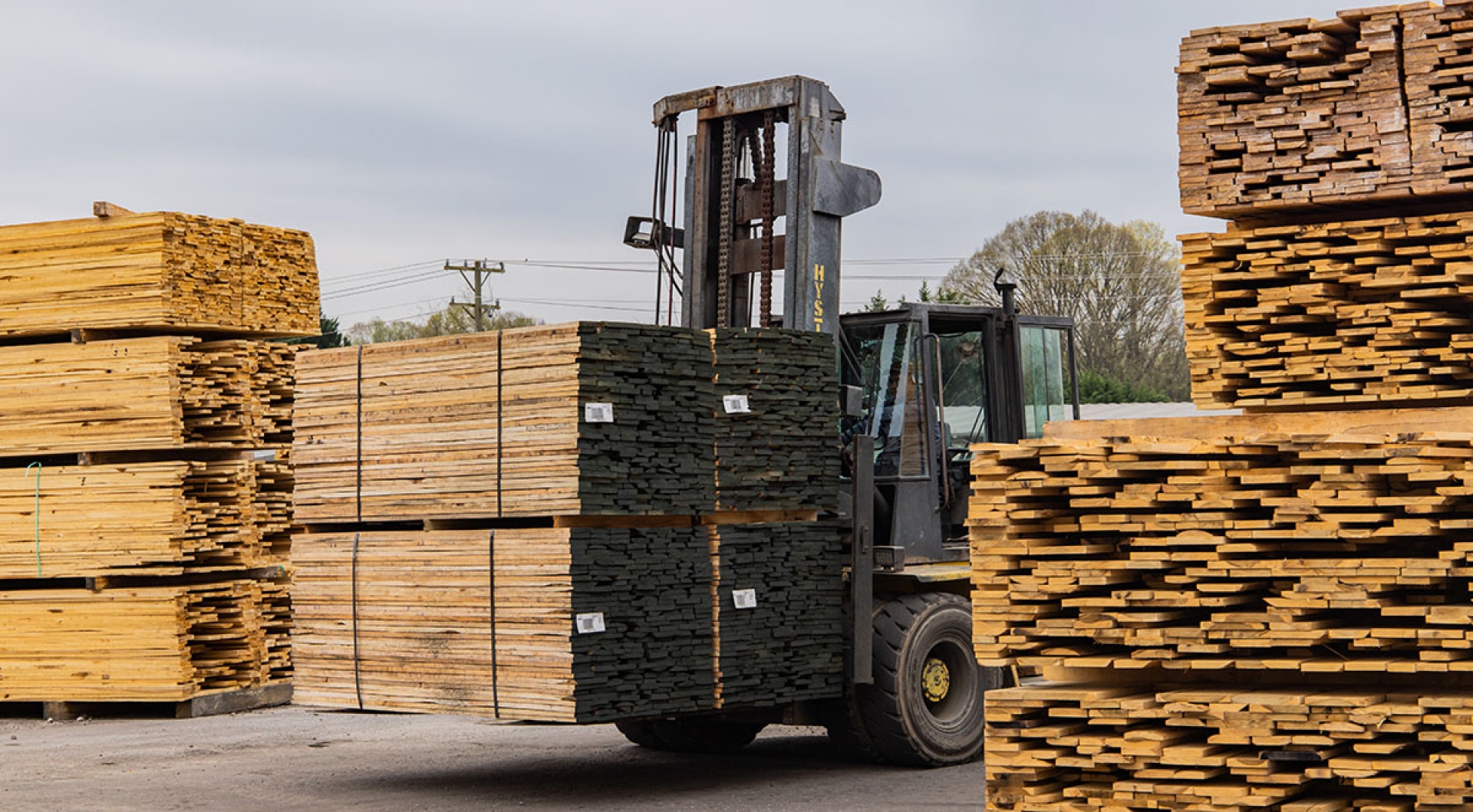
What Qualifies as Hardwood Lumber?
Lumber can be categorized and graded in a variety of different ways. However, there are two main types of lumber. Hardwoods and softwoods. Softwoods are from gymnosperm trees such as pines, cedar, and fir, and are typically less dense. Softwoods are used for framing, structural lumber, and simple outdoor projects.
On the other hand, hardwood lumber comes from much harder woods known as angiosperm or broadleaf trees. Hardwoods are generally dense and more durable, making them resistant to wear. However, hardwoods are much slower-growing, resulting in tighter ring structure and a more complex grain pattern. This slow growth also results in higher costs than softwoods.
Aesthetically speaking, the grain patterns, tight ring structure, and color bring character to products that softwoods do not.
Species of Commercially Viable North American Hardwoods
- Red Oak: Light to medium reddish-brown in color with a prominent, open grain pattern and coarse texture. Red oak is widely used for furniture, cabinetry, flooring, millwork, and interior trim due to its strength and availability.
- White Oak: Light brown to olive-brown with a straighter, tighter grain than red oak. Known for its durability and moisture resistance, white oak is used for furniture, flooring, cabinetry, exterior millwork, and barrel staves.
- Hard Maple (Sugar Maple): Creamy white to light tan with a fine, uniform grain and smooth texture. Hard maple is valued for its hardness and wear resistance, making it ideal for flooring, butcher blocks, cabinetry, and work surfaces.
- Soft Maple (Red or Silver Maple): Light-colored with subtle grain patterns and a softer texture than hard maple. It machines easily and is commonly used for furniture parts, mouldings, cabinets, and painted applications.
- Hickory: Pale to medium brown with dramatic color variation and a bold, often irregular grain. Hickory is extremely strong and shock-resistant, making it suitable for tool handles, ladder rungs, flooring, cabinetry, and rustic furniture.
- Ash: Light tan to pale brown with a straight, open grain similar to oak but typically lighter in weight. Ash is used for furniture, flooring, millwork, tool handles, and sporting goods such as bats and gym equipment.
- Cherry: Warm reddish-brown that deepens with age, featuring a fine, smooth grain and satiny texture. Cherry is commonly used for high-end furniture, cabinetry, architectural millwork, and interior trim.
- Black Walnut: Rich chocolate brown heartwood with occasional purplish or gray tones and a straight to slightly wavy grain. Walnut is prized for premium furniture, gunstocks, cabinetry, veneers, and decorative applications.
- Yellow Poplar: Pale yellow to light green or brown with a straight, even grain. Easy to machine and paint, it is often used for painted furniture, cabinets, doors, mouldings, and interior trim.
- American Beech: Pale cream to light brown with a fine, tight grain and smooth texture. Beech is commonly used for furniture frames, flooring, veneer, crates, and turned products.
- Birch (Yellow or Sweet Birch): Light yellow to reddish-brown with a fine, even grain that resembles maple. Birch is used for cabinetry, plywood, veneer, furniture, and millwork.
- Sycamore: Light tan to reddish-brown with a distinctive interlocking grain that can produce a lace-like figure. Sycamore is used for furniture, butcher blocks, veneer, and specialty millwork.
Appalachia Supplies the World with Premium Quality North American Hardwoods
The United States is vast, and there are several regions where hardwoods can come from, with over 50% of hardwoods being Oak. However, Appalachia is home to some of the most sought-after timber in the world due to its ideal climate conditions and biodiversity.
The region's unique growing conditions support a wide variety of hardwood species from oak and hickory to maple and cherry. Cool winters and warm, moist summers promote slow, steady growth, which produces dense, tight-grained wood prized for its strength, stability, and durability.
Diversity in the region offers a broad spectrum of species that can meet nearly any manufacturing requirement. This allows mills to supply everything from heavy-duty structural lumber to finely grained, appearance-grade boards. All of this is harvested from well-managed forests.
Finding The Right Sawmill and Planer Mill
When it comes down to finding a supplier, selecting the right sawmill and planer mill is critical for manufacturers who rely on high-quality hardwoods. Not all mills can handle the consistency and quality that is required by customers across the globe. Choosing the wrong supplier can lead to wasted labor and material inconsistencies.
Dependable sawmills will have advanced equipment and experienced operators who understand the nuances of each available hardwood species. They will use proper sawing techniques, accurate controls, and efficient drying schedules to ensure that boards remain stable, straight, and ready for production. Planer mills are equally important, as uniform surfacing and finishing will determine how well the lumber will hold up long term.
Additionally, a good mill will emphasize quality control at every stage of the process. By integrating quality control methods throughout each process, a mill can be sure that each board will meet customer specifications while minimizing waste and downtime.
Select Hardwoods Offers High Quality Hardwoods for Export
If you are a manufacturer or builder seeking the highest-quality hardwoods for export, choose the Select Hardwoods division of Church & Church Lumber Company. We provide kiln-dried, premium hardwoods ideal for millwork, furniture, flooring, and other precision applications across the United States and around the world.
Our sawmill features a 400,000-board-foot kiln capacity, allowing us to dry, equalize, and condition lumber to precise specifications for superior performance and stability. Once dried, each board is carefully evaluated to ensure it meets rigorous quality standards, providing consistency that manufacturers rely on.
Select Hardwoods serves both domestic and international orders, emphasizing meticulous preparation, strict quality control, and dependable, on-time delivery. Contact our team today to discuss your hardwood requirements and see why manufacturers worldwide trust Select Hardwoods for premium Appalachian hardwoods.