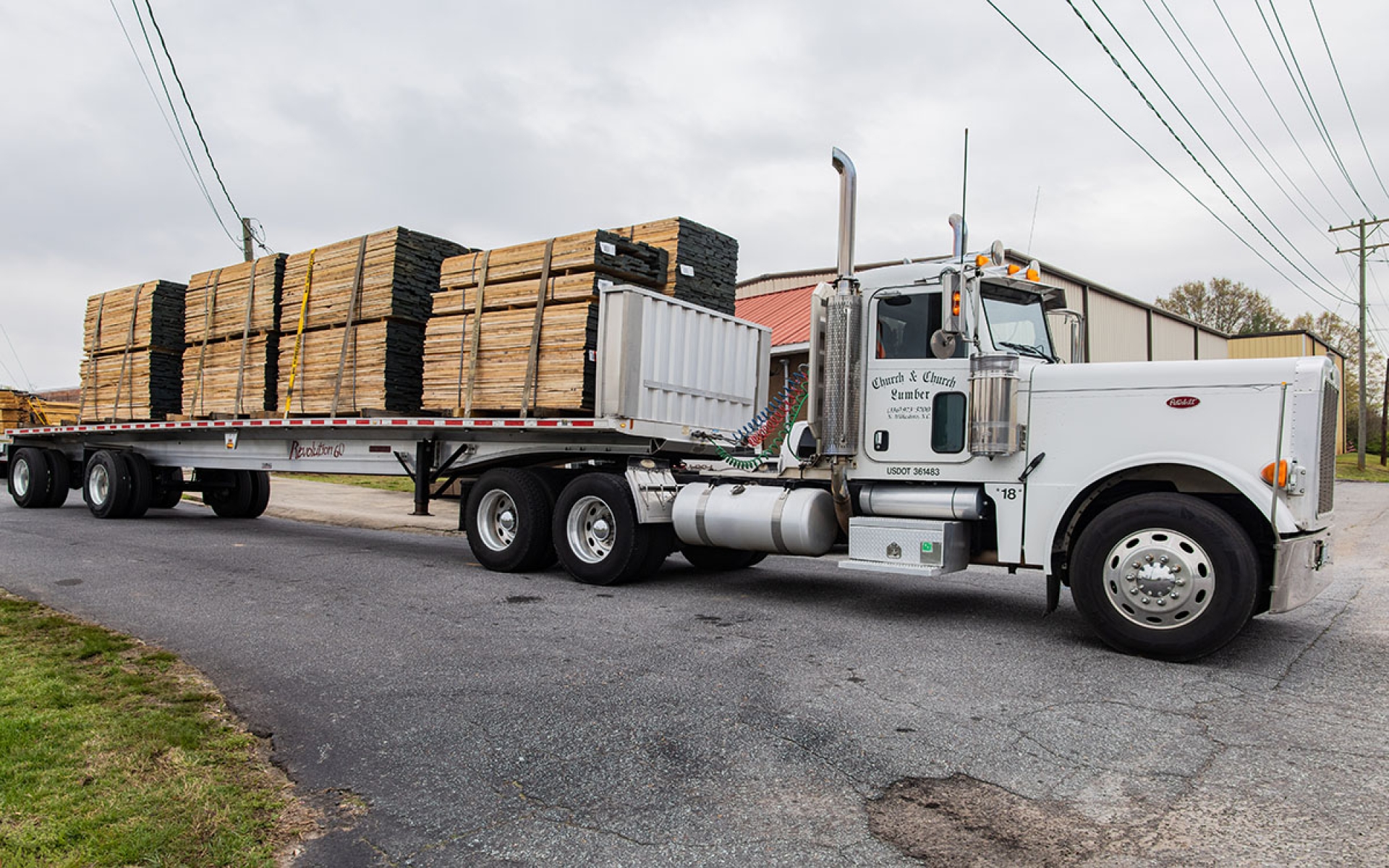
1. What Is Lumber Exporting?
Lumber exporting is the process of preparing, selling, transporting, and delivering lumber from a producer or supplier in one country to customers in another. In the hardwood industry, this may involve everything from relatively straightforward shipments of standard grades to carefully prepared orders based on species, grade, thickness, drying requirements, lengths, and customer specifications.
International buyers are often purchasing lumber for specific manufacturing processes. A flooring manufacturer may have different requirements from a furniture producer. A millwork company may prioritize particular widths, lengths, colors, or grain characteristics. Other customers may be primarily concerned with purchasing a reliable volume of a particular hardwood species.
That means a lumber exporter must understand both the hardwood being sold and the requirements of the company buying it.
Exporting is ultimately a supply chain. Every part of that chain needs to work together, from sourcing logs and processing lumber to preparing documentation and getting the shipment onto a truck, rail line, or ocean vessel.
2. Where Does Export Hardwood Lumber Come From?
The quality of exported hardwood starts long before a container is loaded.
The Appalachian region of the United States is one of the country's important hardwood-producing areas. Its forests provide numerous commercially valuable species used for flooring, cabinetry, furniture, moulding, architectural products, millwork, and other applications.
Appalachian hardwoods can include species such as:
- White Oak: Widely used for flooring, cabinetry, furniture, millwork, barrels, and architectural applications.
- Red Oak: Common in flooring, furniture, cabinets, moulding, and interior products.
- Walnut: Valued for furniture, cabinetry, architectural millwork, and decorative applications.
- Cherry: Frequently used for furniture, cabinetry, millwork, and interior woodworking.
- Poplar: Used extensively for moulding, furniture components, painted products, and other manufacturing applications.
- Hickory: Known for its distinctive appearance and often used for flooring, cabinetry, and furniture.
- Hard And Soft Maple: Used for furniture, cabinets, flooring, millwork, and specialty products.
- Ash: Used for furniture, millwork, sporting goods, handles, and other manufactured products.
Having access to quality hardwood resources gives an exporter the ability to provide customers with dependable species and grade options.
3. How Is Hardwood Lumber Prepared For Export?
Export lumber must be prepared according to the needs of the customer and the requirements associated with shipping it to its destination. The process usually involves several stages before the lumber ever reaches a container.
Sawing Hardwood Lumber
Logs are first processed into boards according to the desired thickness and sawing method. Depending on the product, lumber may be plain sawn, rift sawn, quarter sawn, or produced using another specification.
How lumber is sawn can influence its grain pattern, appearance, dimensional characteristics, and potential applications. For manufacturers purchasing a specific product, those characteristics can be extremely important.
Grading And Sorting Lumber
Hardwood lumber is commonly graded according to recognized industry standards, including standards developed by the National Hardwood Lumber Association. Grading helps buyers understand the amount of usable clear wood available in a board and allows lumber to be bought and sold using more consistent terminology.
Sorting may go beyond grade. Depending on the order, lumber can potentially be sorted according to thickness, width, length, color, species characteristics, or other specifications requested by a customer.
Reliable grading and sorting help ensure that the buyer receives lumber appropriate for the intended manufacturing process.
4. How Are Export Lumber Orders Put Together?
An export order usually begins with a conversation about exactly what the customer needs.
Species is only one part of the specification. Buyers may need a particular thickness, grade, moisture level, volume, length distribution, or other characteristics. A customer producing flooring may have substantially different requirements from a business manufacturing high-end furniture or architectural components.
Common order considerations can include:
- Hardwood species
- Lumber grade
- Thickness
- Kiln-dried or air-dried condition
- Moisture requirements
- Length requirements
- Width requirements
- Volume
- Packaging requirements
- Shipping destination
- Customer-specific sorting requirements
Clear specifications are especially important with international transactions. Resolving questions before lumber is prepared and shipped is considerably easier than addressing a specification problem after a container has crossed an ocean.
5. How Is Hardwood Lumber Packaged For International Shipping?
Once lumber has been graded, sorted, and prepared, it must be packaged for transportation.
Hardwood lumber is generally stacked into bundles that can be handled efficiently with forklifts and other loading equipment. Proper stacking helps keep the lumber organized while also reducing the possibility of movement or damage during transportation.
Export shipments may spend weeks in transit. Lumber can travel by truck before reaching a port, remain in a container during ocean transportation, and then continue through another transportation network after reaching the destination country.
Proper packaging is therefore an important part of protecting the product. The objective is straightforward: lumber should arrive in a condition that allows the customer to put it to use efficiently.
6. How Is A Shipping Container Loaded With Hardwood Lumber?
Container loading is one of the most visible parts of lumber exporting, but it requires planning. Hardwood is heavy. A container cannot simply be filled until there is no more room. Exporters must consider the volume and weight of the lumber as well as transportation limitations.
Bundles must also be positioned securely. Poor loading can allow cargo to shift while the container is being transported by truck, moved around a port, loaded onto a vessel, or carried across the ocean. Efficient loading helps maximize the amount of lumber transported while staying within applicable weight limits and protecting the shipment.
Once loading is complete, the container is secured and prepared for transportation to the port or another freight connection.
7. What Documentation Is Needed To Export Lumber?
International lumber shipping requires paperwork that goes well beyond a normal domestic delivery.
The exact requirements can vary according to the country receiving the lumber, the product, shipping arrangement, and applicable regulations. Documentation associated with an export shipment may include commercial invoices, packing information, bills of lading, customs documentation, certificates, and other records.
Plant and wood products can also be subject to phytosanitary requirements designed to reduce the movement of pests and plant diseases between countries.
Because requirements vary among destinations, exporters need to understand what documentation applies to each shipment. Accuracy matters. Problems with paperwork can create customs delays, additional costs, or difficulties when the shipment reaches the destination.
8. How Does Export Lumber Get From The Mill To The Customer?
International hardwood shipping usually involves several different stages of transportation. Lumber may first move by truck from the mill or lumber facility to a warehouse, rail connection, container terminal, or seaport. Containers are then transferred into the international freight network and eventually loaded onto a vessel.
Once the vessel arrives at the destination port, the container must clear the appropriate import and customs procedures before continuing to the customer.
A simplified export process may look like this:
- The customer places an order and confirms specifications.
- Lumber is selected, processed, dried, graded, and sorted.
- Bundles are prepared for shipment.
- Required export documentation is completed.
- Lumber is loaded into the shipping container.
- The container travels to the port.
- The shipment travels by vessel to the destination country.
- Customs and import requirements are completed.
- The container travels to the buyer or manufacturing facility.
There are many details within those steps, but the basic goal remains the same: move the correct product from the supplier to the customer as reliably as possible.
9. Why Is Appalachian Hardwood Exported Around The World?
American hardwoods are used in manufacturing markets around the world because they provide desirable combinations of appearance, machining characteristics, strength, availability, and species diversity.
Different regions may also have different preferences for species and products. White Oak, for example, can be used across an extensive range of applications, while Walnut may be selected for projects where its darker color and distinctive appearance are especially valuable. International manufacturers purchase American hardwoods for products including flooring, furniture, cabinetry, doors, moulding, architectural millwork, components, and other finished goods.
The ability to consistently provide the right grade, species, thickness, and volume can be just as important as the quality of the lumber itself.
10. Where Do We Ship Appalachian Hardwood Lumber?
Our customers are not limited to one region. We provide high-quality Appalachian hardwoods to buyers across the United States and in international markets.
Hardwood Lumber Shipped To The West Coast
The West Coast represents an important market for American hardwood products. Manufacturers, distributors, woodworking businesses, architectural companies, and other customers may source Appalachian species even though those forests are located thousands of miles away.
Reliable transportation and careful order preparation make it possible to connect Appalachian hardwood production with customers throughout western markets.
Hardwood Lumber Shipped To Texas
Texas has a large manufacturing, construction, distribution, and woodworking economy. Hardwood may be used for flooring, furniture, cabinetry, architectural millwork, commercial projects, and other applications.
Supplying Texas customers requires the same focus on species, grade, consistency, and dependable shipping that applies to international export markets.
Appalachian Hardwood Exported To Vietnam
Vietnam has become an important manufacturing market for American hardwoods. Lumber can be used by furniture manufacturers, woodworking operations, flooring producers, and other companies that convert rough hardwood into finished products.
For customers operating large manufacturing facilities, dependable volume and consistent specifications are particularly important.
Appalachian Hardwood Exported To China
China has historically been one of the major international markets for American hardwood lumber. Hardwood can be purchased for furniture, flooring, millwork, cabinetry, and a broad range of manufactured wood products.
Exporting to China requires coordination among the lumber supplier, freight companies, ports, customs systems, importers, and customers.
Appalachian Hardwood Exported To Europe
European buyers also use American hardwood species for furniture, interiors, flooring, architectural projects, and specialty woodworking.
European customers may have detailed requirements related to species, grade, sustainability documentation, dimensions, or product characteristics. Working closely with customers before shipment helps ensure those requirements are understood.
11. Why Does Choosing The Right Lumber Exporter Matter?
Purchasing lumber from another region or country requires trust. The buyer cannot simply walk through the lumber yard and personally inspect every bundle before it ships. That makes consistency and communication extremely important.
An experienced lumber exporter understands that customers need more than lumber loaded into a container. They need confidence that their order has been prepared according to the specifications they requested.
The right supplier should understand hardwood species, processing, grading, drying, packaging, logistics, documentation, and the requirements of international customers.
Good communication also matters when market conditions, transportation schedules, vessel availability, customer production requirements, or other circumstances change.
12. How Does Lumber Exporting Support The Hardwood Industry?
Export markets create additional opportunities for hardwood producers, landowners, sawmills, dry kilns, planer mills, transportation companies, ports, and other businesses involved in the forest products industry.
A tree harvested in the Appalachian region can eventually become flooring in Europe, furniture in Vietnam, cabinetry in another part of the United States, or a finished wood product in another international market. That connection between forests, mills, manufacturers, and customers demonstrates the scale of the hardwood supply chain.
Successful exporting also depends on maintaining quality throughout that chain. Good forestry, careful harvesting, proper sawing, effective drying, accurate grading, thoughtful sorting, and reliable shipping all contribute to the value of the finished product.
Choose Us For High-Quality Appalachian Hardwood Lumber
When you purchase Appalachian hardwood lumber, you need a supplier that understands what happens before, during, and after the lumber leaves the mill.
We supply high-quality Appalachian hardwoods to customers across the United States and throughout the world, including markets on the West Coast and in Texas as well as international destinations such as Vietnam, China, and Europe. We understand that every customer has different manufacturing requirements, which is why species, grade, drying, sorting, packaging, and order specifications all matter.
From preparing hardwood lumber for shipment to coordinating the logistics required to move it across the country or around the world, our goal is to provide customers with dependable products and knowledgeable service.
If your business needs a reliable source for Appalachian hardwood lumber, choose us for your next order. Contact our team to discuss the species, grades, dimensions, volume, and shipping requirements your operation needs.